

RISING DAMP
What is Rising Damp?
Moisture that comes from the ground is known as rising damp and because London sits on a bed of clay, ground moisture is prevalent. Every building should have what is called a damp proof course, which is sandwiched between the first few courses of bricks and this acts as a barrier to prevent moisture from passing and affecting the structure.
Older London Properties
London is an ancient city and many houses are at least 70 years old and, in those times, the DPC was a thin strip of bitumen-based material that was laid on top of a bed of mortar as the first two brick courses were laid. Time takes its toll and any ground movement can cause the DPC membrane to tear, which renders the barrier useless and moisture is drawn up the building with capillary action, much like paper absorbs liquid. Of course, there would be no obvious signs that this has happened, but as time passes, damp will rise up the structure, causing damage to the materials.
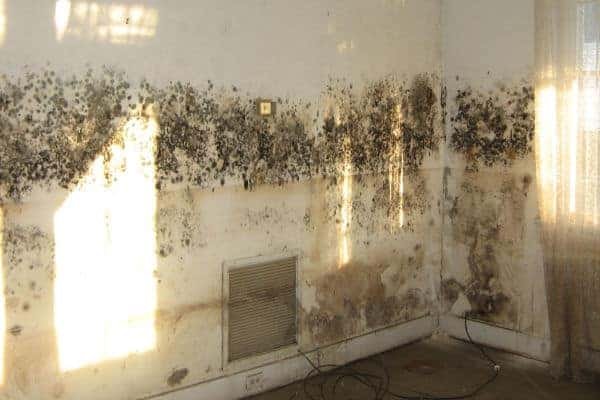
Tell-Tale Signs of Rising Damp
The signs include the following:
- Damp patches close to the ground level, damp that does not dry out.
- Peeling wallpaper and bubbling paint.
- Moss growth on external walls
- Blown plaster.
- Mould growth on skirting boards.
- Horizontal salt lines on internal walls.
Should you notice any of these signs in your home, don’t hesitate to contact London Damp Specialists and book an independent damp survey. If there are moisture or damp issues, we will find them and what’s more, we will recommend the best long-term solution.
Long-Term Solutions to Rising Damp
Rising damp is very common in London homes and the best solutions include:
- Repairing/replacing existing DPC, which is not often practical.
- Chemical foam injectable used to fill cavity walls.
- Removal of materials that allow moisture to climb above the DPC membrane.
The most common treatment is the injectable foam that creates an impenetrable moisture barrier that is guaranteed to prevent the rise of damp. Repairing DPC can be difficult if not impossible, depending on the location of the breach.
Ground Subsidence
Movement in the ground is a major cause of DPC membrane damage, it might be due to parking a heavy vehicle in the driveway, construction nearby or even a civil engineering project. Parts of London are volatile regarding geology and a single event could affect hundreds of buildings.
Why Regular Damp Inspections Are Important
As previously mentioned, there are no announcements when damp impacts a building; it could be months before the property owner realises something is wrong. If a property is unoccupied for any length of time and there are damp issues, the owner might be in for a big shock and repairs could run into thousands of pounds. Many of our customers book an annual independent damp survey as a matter of course, fully aware that damp can strike at any time.
Range of Independent Damp Surveys
We offer London homeowners options when it comes to damp inspections, with 3 survey levels, which are as follows:
- Level 1 Damp Survey – A thorough inspection of exterior and interior walls, floors, and ceilings to identify tell-tale signs of rising or penetrating damp. The survey includes damp detection and inspection of all walls and floors, as well as leak inspection of drains and water pipes to locate possible sources of moisture. Designed for buyers and sellers, it determines the presence of damp, mould, and timber rot. £199 + VAT.
- Level 2 Damp Survey – Everything included in Level 1 plus a closer examination of structural components such as joists, rafters, window frames and door frames. The surveyor also carries out a detailed dry/wet rot and woodworm inspection to identify any timber decay. If issues are found, we can recommend a trusted London damp-proofing contractor to carry out the required work. £299 + VAT.
- Level 3 Damp Survey – Our most comprehensive survey. Level 3 includes everything from Levels 1 and 2 plus an advanced set of diagnostic tests. This survey uses thermal imaging and air humidity testing to identify hidden moisture issues, along with an HD borescope camera for checking loft spaces, cavities and other hard-to-reach areas. We also carry out a full brickwork pointing inspection, DPC inspection, and a ventilation flow test on extractor fans to assess airflow and mould risk. For external parts of the property, we include 4K drone imagery to inspect the roof, chimney stack and guttering safely and in high detail. All Level 3 surveys are non-invasive and cause no damage to the property. £399 + VAT.
- Plaster Analysis – An additional service we offer is up to 10 samples of interior plaster, which we test for moisture content to give you a definitive assessment. This is the best way to accurately measure moisture content within walls; results come through quickly and are part of a detailed report that would include images and maybe video. £299 + VAT.
- Mould Lab Swab Testing – We offer professional qPCR mould swab testing, which analyses DNA from a surface swab to detect and quantify specific types of mould present within the property (up to 100 square metres). This laboratory-grade test provides highly accurate results and is ideal for confirming the presence and severity of mould growth. £299 + VAT.
The customer receives a detailed report in their inbox, which is usually delivered within 24 hours of the survey completion. If remedial work is recommended, we can put you in touch with one of London’s top damp-proofing companies.
Don’t take chances when it comes to damp, mould and timber rot.
Book a survey for peace of mind.